
The Best Luxury Resorts on Mexico's Pacific Coast
Mexico’s Pacific coast has quietly become one of the strongest luxury resort corridors in the world, combining dramatic landscapes with standout properties from Los Cabos to Oaxaca. This guide covers the resorts worth knowing before you book.
·
Mexico's Caribbean coast gets most of the attention (Cancun's marketing budget alone could fund a small country), but the Pacific side has been quietly assembling one of the strongest luxury resort corridors in the Americas. From the tip of Baja down through Los Cabos, across to Puerto Vallarta and the Riviera Nayarit, and south to the Oaxacan coast, the Pacific offers something the Caribbean doesn't: dramatic topography. Mountains meet ocean. Jungle spills onto sand. The sunsets happen over water instead of behind you.
Here are the luxury resorts worth knowing about on Mexico's Pacific coast, organized by region.
Los Cabos
Los Cabos (Cabo San Lucas and San Jose del Cabo, connected by a 20-mile resort corridor) is the other anchor of Pacific Mexico luxury. The landscape is desert-meets-ocean, which creates a visual language completely different from the green jungle of Nayarit.
Grand Velas Los Cabos became the only all-inclusive in the world to simultaneously hold Forbes Five Stars, AAA Five Diamonds, and a Michelin-starred restaurant (Cocina de Autor, run by two-star Michelin chef Sidney Schutte). 304 suites, all over 1,100 square feet, every one with ocean views and a 24-hour butler. The food program spans 7 restaurants covering French (Piaf), Italian (Lucca), Mexican (Frida), and the Michelin-starred tasting menu. If you've been skeptical about all-inclusive at the luxury level, this is the property that argues most convincingly against that skepticism.
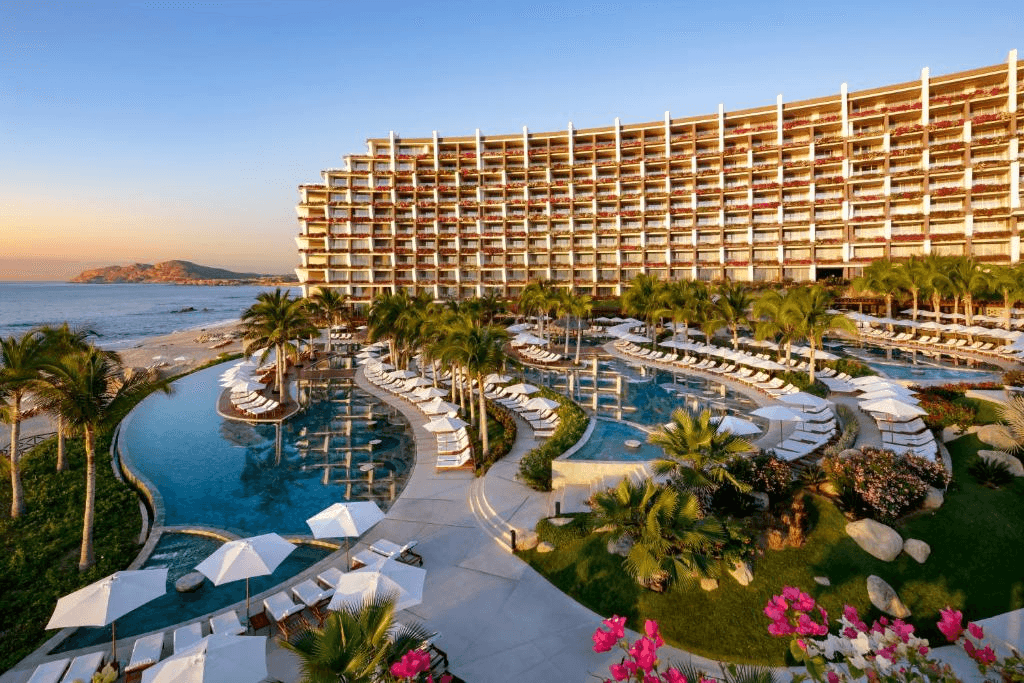
Marquis Los Cabos is a 244-room property on the Pacific side of the corridor. It's smaller and more intimate than the mega-resorts nearby, with a cliff-side position that provides drama without requiring a golf cart to get around. No sargassum (Pacific side), strong dining program, and a spa with ocean views. Marquis occupies a middle ground between the grand-scale resorts and the boutique properties: big enough to have real amenities, small enough to feel personal.
The Cape, a Thompson Hotel sits on the Cabo San Lucas end of the corridor with floor-to-ceiling glass walls facing the Pacific and the famous El Arco rock formation. The design is modern and unapologetically so (concrete, glass, clean lines), which makes it a visual departure from the hacienda-style properties that dominate the area. Manta, the ground-floor restaurant by Enrique Olvera (the chef behind Pujol in CDMX), is worth a meal even if you're not staying here. The rooftop bar has what might be the best sunset view in Los Cabos.
Paradisus Los Cabos is a Melia-brand all-inclusive that punches above its chain-hotel classification. The Royal Service suites (the hotel-within-a-hotel upgrade tier) come with private pool access, a dedicated concierge, and a separate check-in experience. The property sits on the San Jose del Cabo end, which is quieter and more town-oriented than the Cabo San Lucas side.
Puerto Vallarta and Banderas Bay
Puerto Vallarta proper sits on the southern end of Banderas Bay, and the resort landscape here is more varied than the Riviera Nayarit: a mix of all-inclusives, boutique hotels, and larger properties spread between the Marina, the Hotel Zone, and the Romantic Zone.
Casa Velas is an adults-only, all-inclusive boutique hotel that's become one of the most consistently praised properties in PV. Ocean-view suites, a private beach club (a short shuttle ride from the hotel), golf access, and a spa program that justifies the all-inclusive premium. The food is strong across multiple restaurants, and the service culture is the kind of attentive-without-hovering that's hard to train for. It works particularly well for couples who want the convenience of all-inclusive without the scale of a 500-room mega-resort.
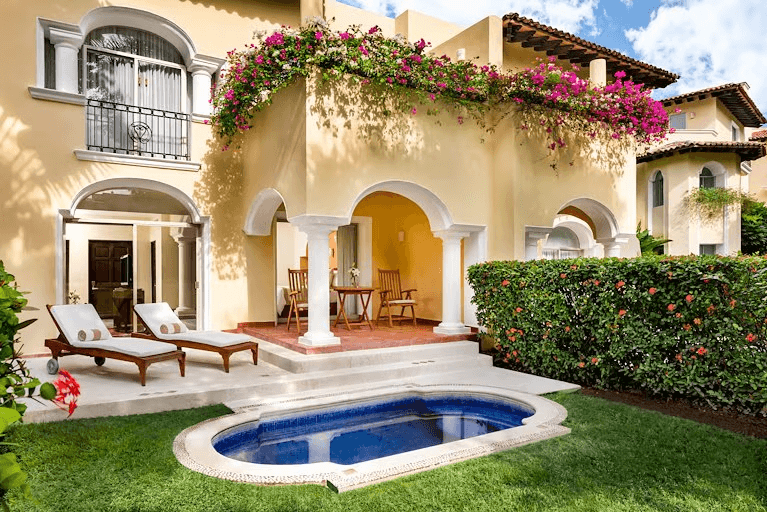
Garza Blanca Preserve is built into the jungle hillside south of PV, overlooking the bay. The property ranges from hotel rooms to full residences, and the higher categories come with private plunge pools, outdoor terraces, and views that justify the elevation. The beach club at the base of the hill is the social center. Garza Blanca also operates a sister property (Hotel Mousai) on the same grounds, which is adults-only and leans more contemporary in design.
Hyatt Ziva Puerto Vallarta occupies one of the better stretches of beach on the bay and runs a family-friendly all-inclusive that delivers on the fundamentals: clean rooms, multiple pools, solid kids' club, and a beach that's calm enough for young children. It's not trying to be a boutique or a design hotel. It's trying to be a reliable family resort, and it succeeds.
Riviera Nayarit
The Riviera Nayarit is the stretch of coastline running north of Puerto Vallarta through Sayulita, Punta Mita, and up to San Blas. It's where the Sierra Madre meets the Pacific, and the combination of jungle, mountains, and ocean gives the resorts here a setting that flat-beach destinations can't match.
Four Seasons Resort Punta Mita sits on a private peninsula at the northern end of Banderas Bay. Two Jack Nicklaus golf courses (Pacifico and Bahia), 2 private beaches, 12 dining outlets, and the kind of operational polish that comes from being in one location for over 25 years. The Tail of the Whale hole on the Pacifico course (a par 3 to a natural island green accessible only at low tide) is one of the most photographed holes in golf. All 3 of the resort's signature restaurants (Aramara, Bahia by Richard Sandoval, and Dos Catrinas) hold Wine Spectator awards. The property also picked up its 10th consecutive Forbes Five-Star rating in 2026 and holds 2 Michelin Keys. For families, the kids' programming is strong, and whale watching runs from the resort's beach from December through March.
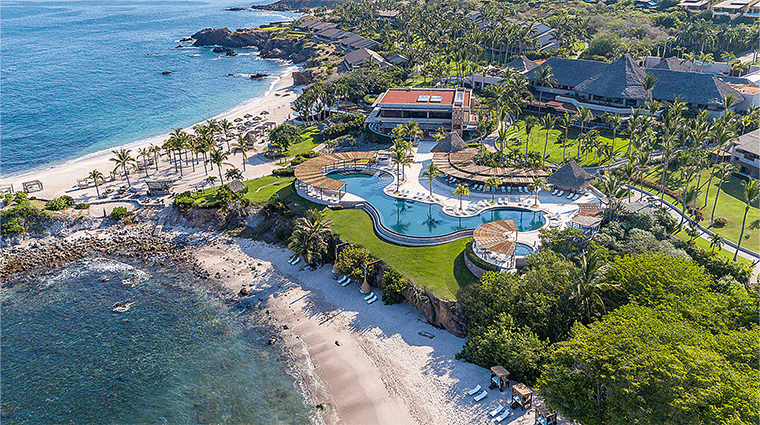
Grand Velas Riviera Nayarit is the all-inclusive flagship of the Grand Velas brand, and it operates at a level that most people don't associate with the all-inclusive model. Forbes Five-Star spa, ocean-facing suites with private plunge pools in the top categories, and a dining program that includes multiple chef-driven restaurants. The property sits where the Sierra Madre foothills slope down to the beach, and the architecture takes advantage of the elevation. Whale watching season (December through March) brings humpbacks into view from the resort's terraces.
Imanta Resorts Punta de Mita is a smaller, wilder option on the Nayarit coast. 12 casitas and villas spread across a jungle hillside above a private beach. The property is designed around the natural landscape rather than imposed on it, with outdoor showers, open-air living spaces, and a restaurant that sources from local fishermen and farms. Imanta attracts the kind of guest who finds big resorts exhausting and wants something closer to a private estate.
Four Seasons Naviva is adjacent to Punta Mita but operates as a completely separate experience. 15 tented bungalows on 48 forested acres, with a maximum of 30 guests at any time. Adults only (16+). Fully all-inclusive with no fixed restaurant hours and no set menus. There's no formal spa building; instead, 2 private freestanding treatment pods with outdoor soaking tubs sit in the forest. The whole concept is built around removing structure: no schedules, no decisions, just the jungle and the ocean. It won 8 Rolling Stone Travel Awards categories in 2025 (including Best Hotels, Best Spas, and Best Quiet Luxury Hotel) and back-to-back Conde Nast Traveler Gold List spots in 2025 and 2026. If your idea of luxury is 1,200 square feet of space with nobody telling you where to be, Naviva is the most convincing version of that concept in Mexico.
The Oaxacan Coast
The Pacific coast of Oaxaca (Puerto Escondido, Huatulco, Mazunte) is the least developed luxury corridor on this list, which is both its limitation and its appeal. The resorts here are smaller, wilder, and more connected to the surrounding landscape.
Hotel Escondido in Puerto Escondido is the property that put Oaxacan beach luxury on the map. Grupo Habita (the design hotel group behind several of CDMX's best hotels) built it on Playa Bacocho with a brutalist concrete-and-wood aesthetic that somehow works perfectly against the jungle. 16 rooms, a black-tiled infinity pool, a bar that's the social center of PE's growing scene, and surf culture baked into the identity. It's not a resort in the traditional sense. It's a design hotel on a wild beach.
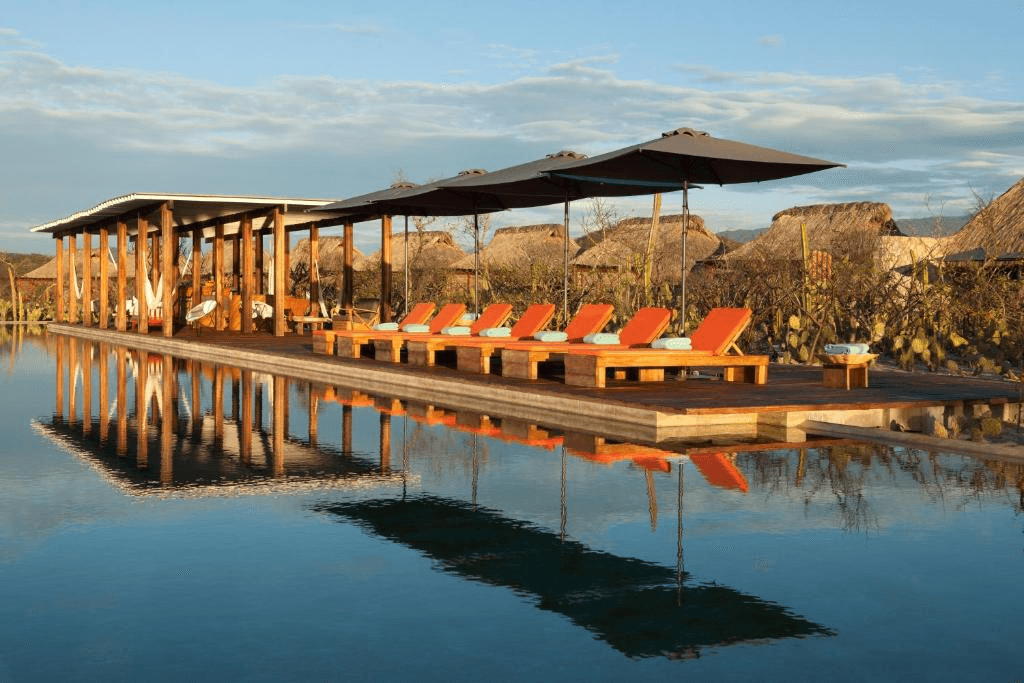
Casona Sforza is a 9-suite property in Puerto Escondido that's been climbing the "best small hotels in Mexico" lists since it opened. Architect Alberto Kalach designed the building as a single sculptural form integrated into the landscape, with each suite opening to ocean views through massive concrete frames. The restaurant serves Oaxacan cuisine using ingredients from local markets and farms. It's the kind of place where architecture people make the trip specifically for the building.
Dreams Huatulco is the most conventional resort on the Oaxacan coast and the best option if you want the all-inclusive model in this region. It sits on Tangolunda Bay, one of the 9 protected bays in Huatulco's national park, with calm water, a long beach, and snorkeling accessible from shore. It's not a design destination, but it's well-run, the beach is genuinely beautiful, and the surrounding national park gives it natural advantages that most all-inclusives in Mexico can't match.
A Few Notes on the Pacific Coast Generally
Water temperature is warm year-round (24-28°C / 75-82°F) but cooler than the Caribbean, especially from January through March when Pacific upwelling brings cooler water to the surface. You won't need a wetsuit for swimming, but snorkelers and divers might want a rash guard in winter months.
Sunsets. The Pacific coast faces west, which means every beach and every ocean-facing room gives you front-row seats to the sunset. This sounds trivial until you've watched a Pacific sunset from a terrace at elevation. The Caribbean faces east, so you get sunrises instead. Different experience.
The surf. The Pacific coast has real waves. Some beaches (Zicatela in Puerto Escondido, parts of Sayulita, La Lancha near Punta Mita) are surf destinations first and swimming beaches second. If you're booking a resort for beach swimming, check whether the specific beach has surf break or calm conditions. The two can be 500 meters apart.
Whale season. Humpback whales are in Banderas Bay from December through March. Gray whales are in the Baja lagoons from January through March. If wildlife encounters matter to you, winter is the season.
About Us
Alta Mexico is a curated travel resource dedicated to showcasing the very best of Mexico's food, culture, people, and places. What begins as a single visit often turns into something deeper, and this platform exists to capture that experience.
From cobblestone streets in Oaxaca to mezcal tucked away in quiet cantinas and sunsets across the Yucatán, Alta Mexico highlights the destinations, meals, and moments that define the country. Whether it’s a first visit or a return trip, the goal is simple: help travelers experience Mexico with more intention and insight.
Read More

From world-class fine dining in Polanco to bustling market stalls and late-night taco stands, this is your neighborhood-by-neighborhood guide to eating your way through one of the greatest food cities on earth.
Update on Apr 8, 2026
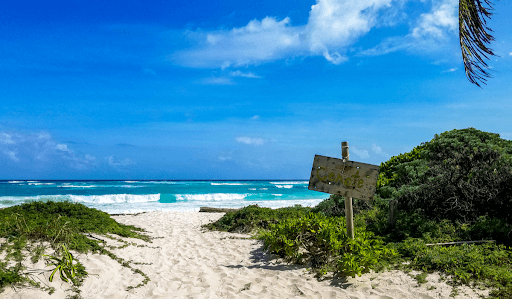
Forget the ranked lists — Mexico's best beaches depend entirely on what you're actually looking for, so we broke them down by surfing, snorkeling, families, solitude, nightlife, and the hidden gems most travelers never find.
Update on Apr 8, 2026
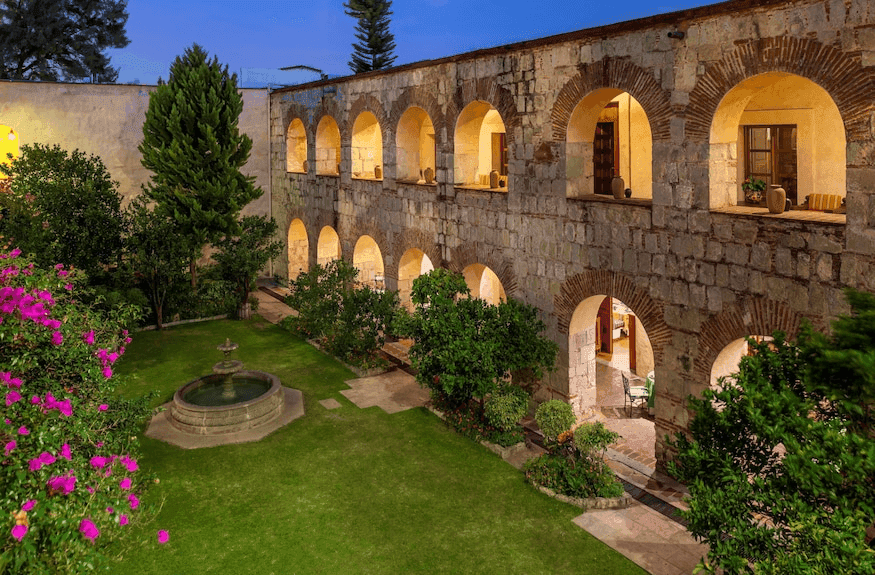
Oaxaca's boutique hotel scene is unlike anywhere else in Mexico, where 500-year-old convents, artist-run guesthouses, and socially conscious properties make the question of where to stay just as interesting as what to eat and drink.
Update on Apr 8, 2026